
Learn the basket before choosing a recipe
An air fryer circulates hot air around food in a compact chamber. That makes surface area and spacing important. The University of Illinois Extension air fryer guide describes the appliance and notes that food types behave differently. A basket full to the rim may have plenty of volume on paper but little room for air to reach the pieces in the middle.
Read your model's manual for preheating, safe accessories, maximum fill and cleaning. A paper liner or dish that works in an oven is not automatically approved for every air fryer. If you use an insert, follow the maker's instructions and keep it secured by food where required. Never put a loose liner into an empty preheating basket.
For the first session, choose one food and one recipe. Make the stated amount or less, keep pieces similar in size and note how often the recipe asks you to shake or turn them. This gives you a baseline before you try a crowded family batch. Our air fryer explainer covers the heater and fan in more detail.
Begin with potato coins
Potatoes are a useful first project because you can see how spacing changes the result. The University of Nebraska's potato coin recipe gives a complete ingredient list, slice thickness, temperature and timing. Follow that method as written for a first try rather than combining it with a different recipe's cook time.
Wash and cut the potatoes evenly, then coat them as the recipe directs. Spread them without stacking. If a batch is too large, cook it in two rounds. After the first round, compare the center and edge pieces. That observation tells you whether the basket was too crowded or whether the pieces need more even cutting next time.
Potato coins can be a side dish, not the whole dinner. Pair them with a salad, cooked protein or another vegetable. If you add cheese or a topping, return the food only for the time directed by the recipe and handle the basket carefully. Keep a note of the amount that fit your own model.
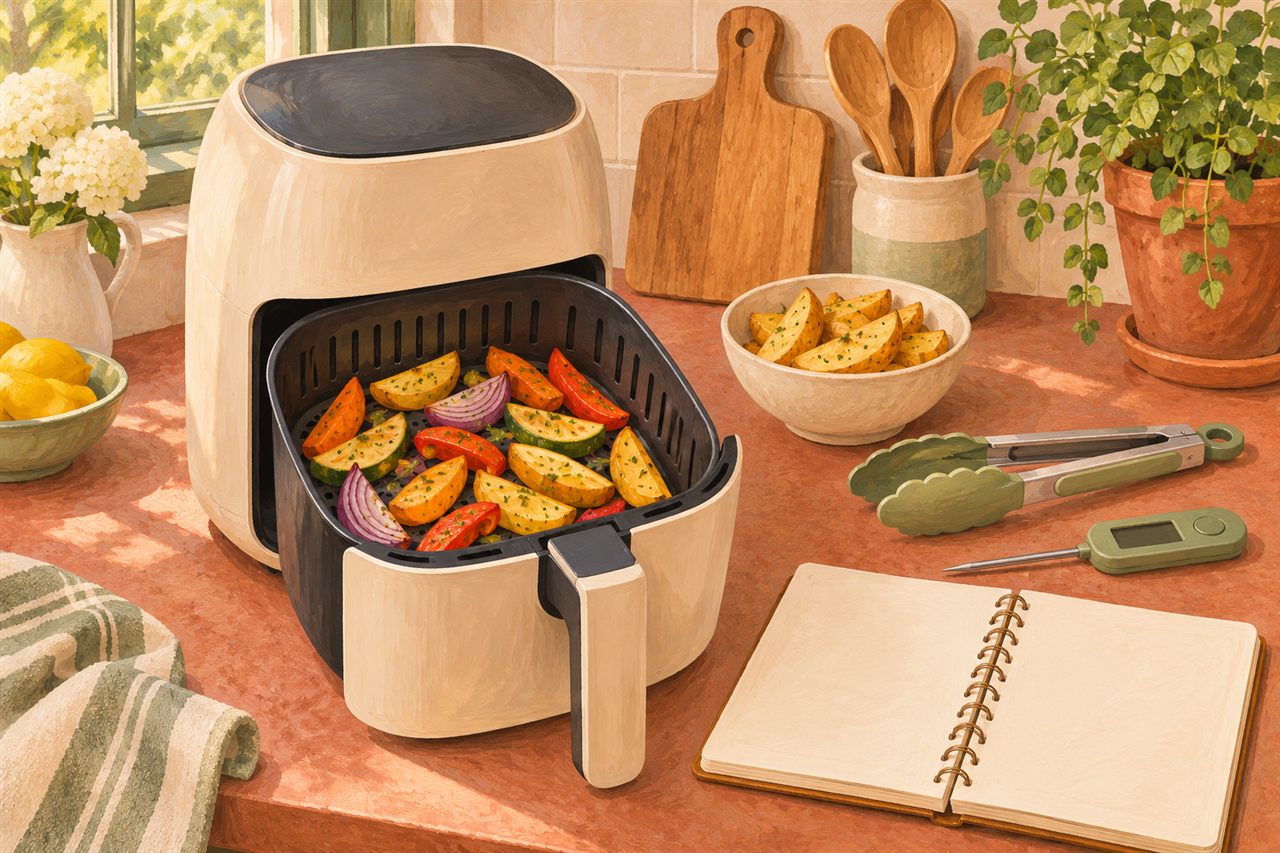
Try a vegetable with a clear recipe
Vegetables vary in water content and density. A leafy green can blow around; a sturdy sprout or potato piece holds position better. The Illinois Extension's roasted Brussels sprouts recipe gives a complete method with a stir partway through. It is a better teaching exercise than a vague instruction to air fry 'any vegetables' until crisp.
Wash, trim and cut according to the recipe. Pat pieces dry when the method calls for it, use the stated amount of oil and do not add a large pile of wet vegetables to a small basket. Look for the texture you want while remembering that the appliance may run hotter or cooler than the recipe writer's model.
If you enjoy that first batch, change the seasoning or try another vegetable with a recipe designed for it. Do not assume a frozen vegetable needs the same time as fresh. Our vegetable prep guide can help with washing and cutting before the food reaches the basket.
Build a simple meal from the sides
Once you have two reliable sides, build a meal around them. Potato coins and a chopped salad work with a stovetop protein; Brussels sprouts can accompany a grain or a sandwich. You do not need to make every component in the air fryer. Using the appliance for one task is often less stressful than trying to synchronize three baskets of food.
The Illinois Extension sweet potato nachos recipe is an example of a more involved dish: it air fries the sweet potatoes, then uses a separate finishing step for toppings. Read the whole recipe before starting so you know which equipment and ingredients it expects. That is a second or third project, after you know how your basket handles a simpler batch.
Write down the order of cooking. If two foods need the same basket, prepare the one that can wait safely first and serve the crispest food last. Do not hold cooked perishable food at room temperature while another batch runs. Use a suitable warming method or choose a menu that avoids the wait.
Use a thermometer for meat and fish
When you move from vegetables to raw meat or fish, treat recipe time as an estimate. Food thickness, load size and appliance design affect the result. The University of Nebraska's air fryer safety guidance says a food thermometer is the way to verify meat, poultry and egg dishes. Insert it into the thickest part, away from a bone or the basket.
The FoodSafety.gov chart lists 165°F (74°C) for poultry, 145°F (63°C) for fish and other values for different foods. Follow the exact chart entry, including any rest time. A golden crust is not proof that the center is safe. If the reading is low, return the food to the appliance and check again.
Keep raw meat and its utensils away from vegetables that will be eaten uncooked. Use clean tongs and a clean plate for the cooked serving. If you are new to food thermometers, practice with a simple recipe and check several pieces in the batch rather than relying on the largest-looking one alone.
Keep a small air fryer notebook
After each recipe, record the model, food amount, cut size, setting and result. You do not need a spreadsheet; a few lines are enough. If potatoes browned on top but stayed pale below, a smaller load or a more thorough shake may help. If food dried out, check it earlier next time. Change one thing at a time.
Clean the basket and tray as the manual directs once they are cool. Grease left under a crisper plate can smoke during the next use. Do not immerse electrical parts or use an abrasive tool where the manufacturer forbids it. A clean appliance also makes it easier to tell whether an odd smell comes from tonight's food or old residue.
When a recipe works, make it twice before scaling it up. Doubling the ingredients may require two batches rather than double the time. The useful measure is how much food can sit with room around it, not the advertised quart capacity.
Beginner air fryer questions
What should I cook first?
Choose a simple, complete recipe for potatoes or a sturdy vegetable. A small batch lets you learn spacing, turning and how your model browns food. Nebraska's potato coin recipe is one suitable example. Follow its instructions and your appliance manual together.
Can I use an oven recipe without changes?
Sometimes, but it is easier to start with a recipe written for an air fryer. Size, airflow and heating differ. If you adapt an oven recipe later, use a reliable guide, check food earlier and verify the safe internal temperature where needed.
Why is my food uneven?
Look at cut size and basket load first. Pieces piled on one another shield surfaces from moving air. Try a smaller amount in a loose layer and follow the recipe's instruction to shake or turn. If the appliance has known hot spots, note where they are.
Is a preset enough for chicken?
No. A preset is a starting program, not a safety measurement. Use a food thermometer and the FoodSafety.gov chart for poultry. Continue cooking if the center has not reached the safe minimum.