
Set a baseline before changing the settings
For a dish you make often, write down the appliance model, food amount, cut size, starting state, mode, temperature and time. Note whether the machine was preheated and whether you shook or turned the food. Without those details, "cook a little longer" can mean something different every night.
Start with your model's manual or a recipe designed for a similar basket and portion. A Philips air fryer manual calls its food-table settings suggestions because ingredients vary in size, shape, origin and brand. That is a useful way to read any timing chart: as a first trial, not a result guarantee.
Make a modest first batch and check before the suggested finish. If it is underdone, extend in short increments; if too dark, change the next batch's setting or piece size. Record the adjustment. Our air fryer airflow guide explains why the machine's heating layout and the load both affect the result.
Keep the pieces and the load consistent
Uneven cuts are an easy source of uneven cooking. A large potato wedge needs more time at its center than a thin sliver, so cut a batch to roughly similar thickness. Do the same for vegetables, tofu or breaded pieces. A precise scale is optional, but the batch size should be comparable if you want the same setting to work next time.
Leave enough floor area for moving air to reach the surfaces. The basket's quart rating is not the amount that can crisp evenly in one layer. Ninja's air frying tips warn against overfilling and recommend shaking for even cooking. If the food is pale below and dark above, try fewer pieces before raising the temperature.
For a family meal, count how many batches the basket actually needs. You may prefer a larger tray oven if a single air fryer drawer turns one dish into three runs. Our air fryer and convection oven comparison walks through usable space rather than headline capacity.
Dry surfaces and use oil deliberately
When a recipe calls for crisp vegetables or potatoes, excess surface moisture can slow browning. Pat washed pieces dry if the recipe directs. A small, even coating of oil may help some foods brown, but it should come from the food's recipe and your appliance guidance, not from filling the drawer. Philips' crispness troubleshooting recommends drying the outside of food before adding oil and cautions against using too much.
Frozen foods, fresh vegetables and breaded items do not all need the same oil step. Read package instructions when provided, and avoid applying a mist or marinade simply because a different recipe did. A wet coating may drip through the basket or brown unevenly. If food has a delicate crust, use a tool and method that will not scrape it off during turning.
Do not put loose paper or foil into an empty preheating basket. Airflow may move it toward the heater. Use liners only when approved for the model and positioned as its instructions require. Our mistakes guide covers liners and blocked vents in more detail.
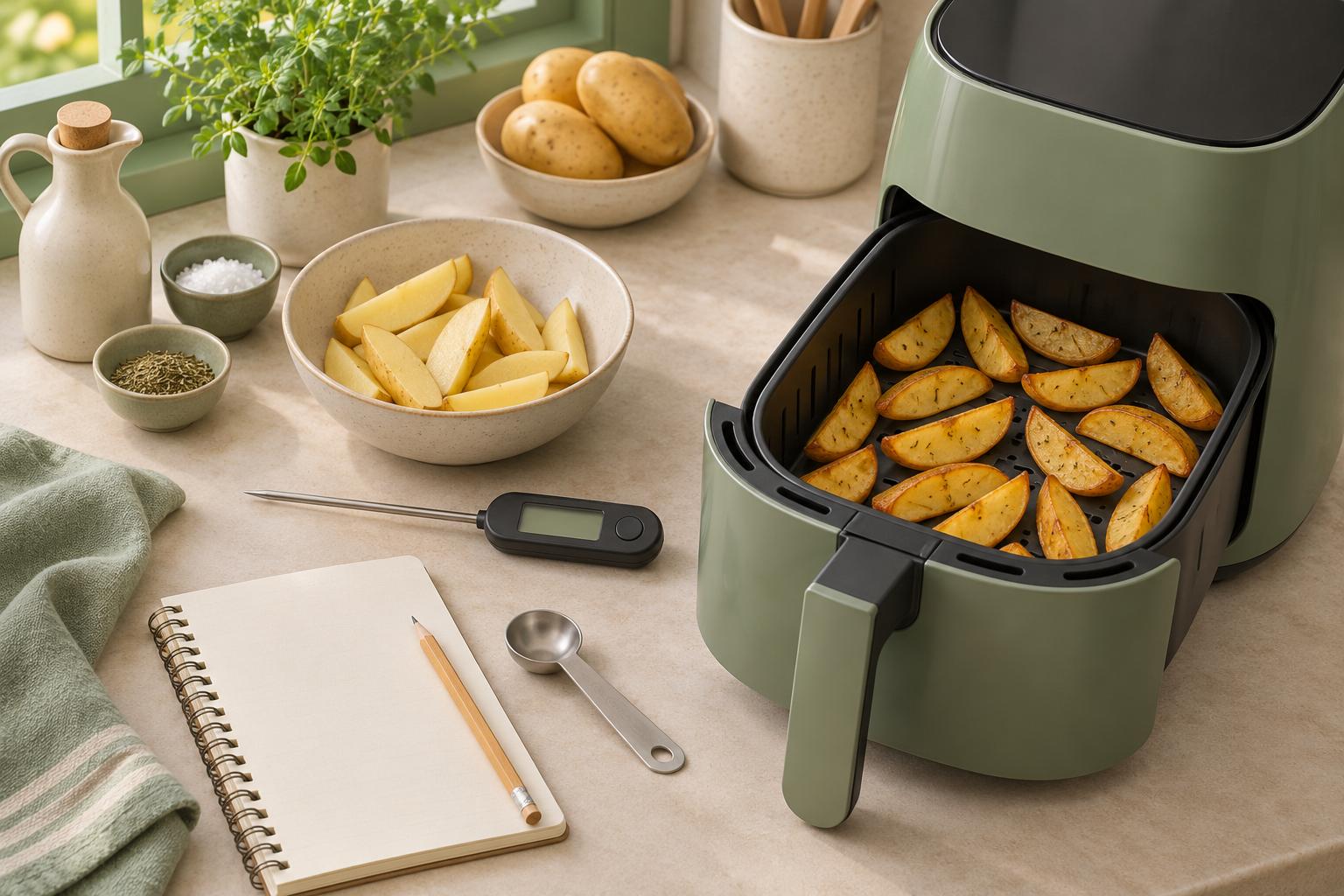
Shake or turn for a reason
Shaking is useful when pieces touch or stack and the lower ones need a new position. Philips' explanation says it helps air reach food in more than one layer and gives a chance to check color. Fragile items may be better cooked in a single layer and turned carefully rather than shaken.
Follow the timing and method in your recipe or model manual. Some machines remind you to shake; others do not. A shake alarm does not mean every ingredient requires the same treatment. For wings or wedges, look for pieces stuck together and move the lower layer upward. For a fillet or a topped dish, use tongs or a spatula if permitted.
Opening the drawer briefly can be worthwhile, but repeated checks release heat. Establish one planned mid-cook check and a final check before the timer ends. If the result is uneven, note whether the food was crowded, whether it was moved and where the pale areas were. That points to a specific change for the next cook.
Use doneness checks that match the food
Color is useful for deciding whether fries or vegetables need more browning, but it is not a reliable safety check for meat or poultry. FoodSafety.gov's temperature chart lists safe minimum internal temperatures by food. Use a suitable food thermometer in the thickest part, and check more than one piece if the sizes vary.
A preset cannot know that one chicken piece is thicker or colder than another. If the outside is dark before the center is done, use a smaller or more even cut next time, adjust the temperature within the recipe's guidance or cook fewer pieces. Do not solve it by serving an underdone center. For leftovers, follow the chart's reheating guidance.
For foods without a safety temperature target in the recipe, use texture and appearance together. A potato wedge can be browned outside but hard in the middle; a vegetable can be tender while still pale. Note which outcome you want and the setting that got you closest.
Clean after each batch of greasy food
Crumbs and rendered fat can affect the next meal. Ninja's tips recommend cleaning the drawer after use to prevent grease buildup. Let parts cool as the manual directs, then wash the removable pieces with the products and tools it permits. Do not immerse the electrical base.
If the basket smokes during a fatty cook, pause and follow the model's instructions rather than masking the smoke with water or a liner. Our air fryer bacon guide describes why rendered fat needs particular attention. Keep the appliance's outside vents clear and use the manufacturer-required counter clearance.
After a successful cook, write down the setup while it is fresh: amount, size, mode, time, mid-cook action and final result. That note becomes your own model-specific recipe. It is more useful than a list of tips that cannot tell you why one batch differed from another.
A four-step improvement loop
- Start small: use a modest quantity and a recipe intended for your machine type.
- Observe: check the bottom, top and center; use a thermometer when food safety depends on it.
- Change one factor: load, cut size, setting, oil or turning, not all at once.
- Record: keep the version that worked and note what you would change next time.
If a recipe repeatedly needs too many batches, the issue may be capacity rather than technique. If one side cooks poorly even with a small load, check the basket placement and manual, then consider contacting the manufacturer. Do not continue using a damaged appliance.
For a starting recipe collection, our air fryer cookbook comparison looks at formats and recipe coverage. A useful cookbook should specify portion size and when to shake or turn, leaving you enough information to adapt it to your machine.
Air fryer cooking questions
Should I always preheat?
Follow the recipe and your model's instructions. Preheating changes the effective cook, so note whether you used it before comparing batches.
Can I fill the basket to the maximum line?
Stay within the manufacturer's limit, but a legal fill level may still be too crowded for crisp results. Use a smaller, looser load when even browning matters.
How often should I shake the basket?
Use the model and recipe guidance, and shake only when it helps move pieces that touch or stack. Delicate foods may need careful turning or a single layer instead.
Why did the second batch finish faster?
The machine may have been fully heated by then. Start checking sooner on later batches, and record the difference so the next meal is easier to plan.