
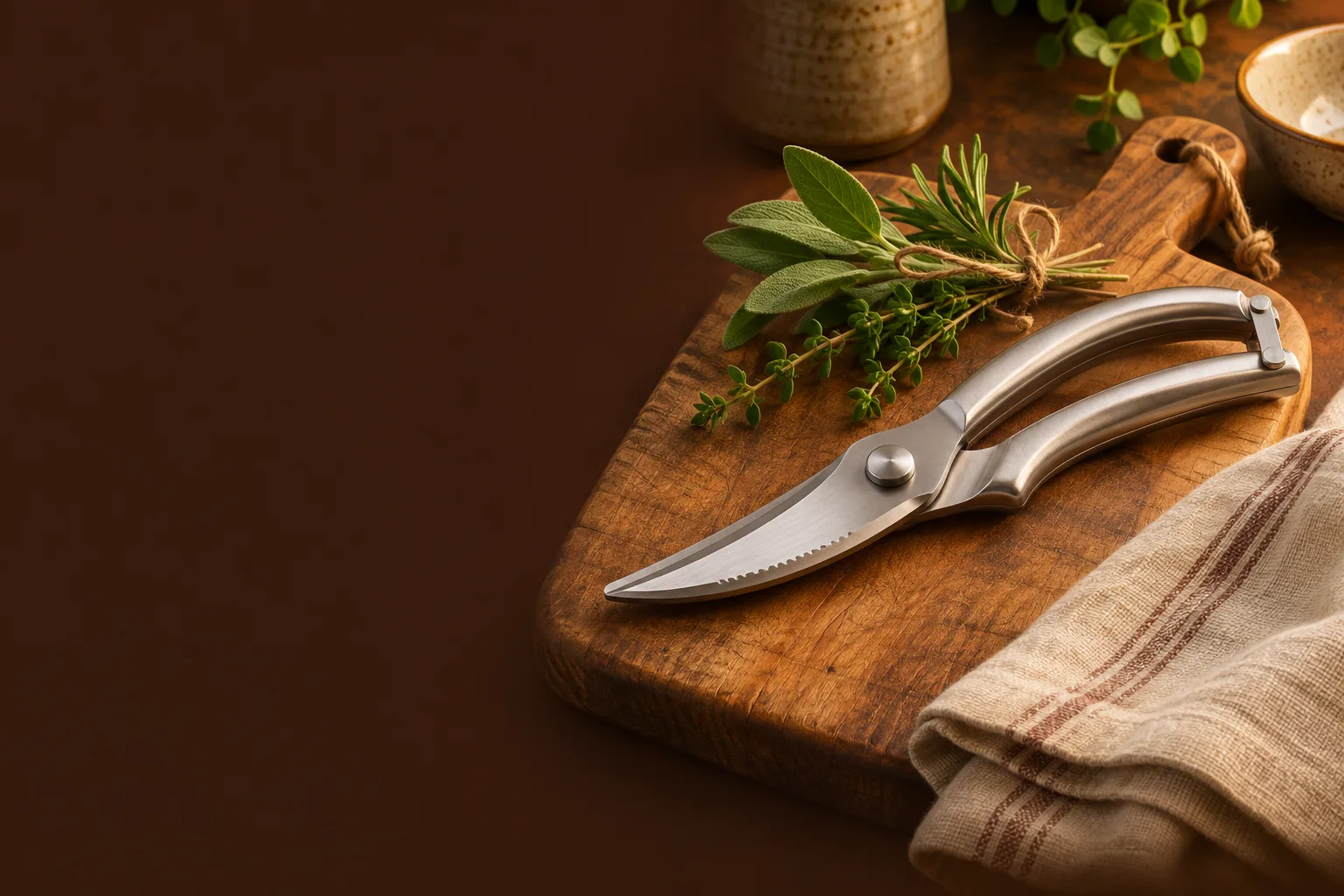
Plan the meal before opening the package
Decide how much you will cook and when. If the meat is fresh, check the package date and move it into the refrigerator promptly. Keep it wrapped or in a covered tray on a lower shelf so juices cannot drip onto other food. The FoodSafety.gov cold-storage chart gives different refrigerator times for ground meat, poultry and whole cuts; do not assume one rule fits them all.
Put the vegetables, seasonings, clean plates and serving utensils on a separate work surface before handling raw meat. This keeps the raw-food stage short and reduces the chance of using the same knife on a salad. Choose a board that will not slide and a knife suited to the cut. A stable setup is more useful than a collection of single-purpose tools.
If the package contains more than you need, divide it with clean hands and utensils, then wrap and refrigerate or freeze the extra according to the storage guidance for that type. Label the package with the contents and date. Do not leave it on the counter while cooking the first portion.
Thaw in the refrigerator when you can
Plan ahead for a refrigerator thaw. It takes longer but keeps the food at a controlled temperature. The USDA FSIS lists three safe thawing methods: refrigerator, cold water and microwave. It says food thawed in cold water or the microwave should be cooked immediately. Thawing on the kitchen counter is not on that list.
For a cold-water thaw, the package needs to be leakproof and the water must stay cold. Follow the USDA's method, including changing the water as directed. If you use the microwave, check the appliance instructions and move straight to cooking; parts of the meat may begin to warm during the defrost cycle.
Do not time a roast by the schedule for a small packet of mince. The size and shape of a frozen piece make a difference. If dinner is close and the meat is still frozen, choose a different meal or use a recipe that explicitly allows cooking from frozen and tells you how to verify doneness. A rushed counter thaw creates a problem that a thermometer at the end does not undo.
Keep raw meat separate from other food
Use a dedicated board or clean the board, knife and counter thoroughly before preparing ready-to-eat vegetables. FoodSafety.gov's clean and separate steps explain how raw meat, poultry and seafood juices can spread to other foods. Keep a clean plate for cooked meat; do not return it to the raw-meat tray.
Do not wash raw poultry in the sink. The USDA advises against washing chicken because splashes can carry bacteria to nearby surfaces. Cooking to the right temperature is what addresses the safety risk. Patting a piece dry with a disposable towel for a recipe is different from rinsing it, but still requires careful handling and disposal.
Wash hands with soap and water after touching raw meat, the package or contaminated utensils. Wipe up drips before they travel across the worktop. Do not reach into a spice jar with raw-meat fingers; measure seasoning into a small dish first. These habits make a busy cooking session easier to control.
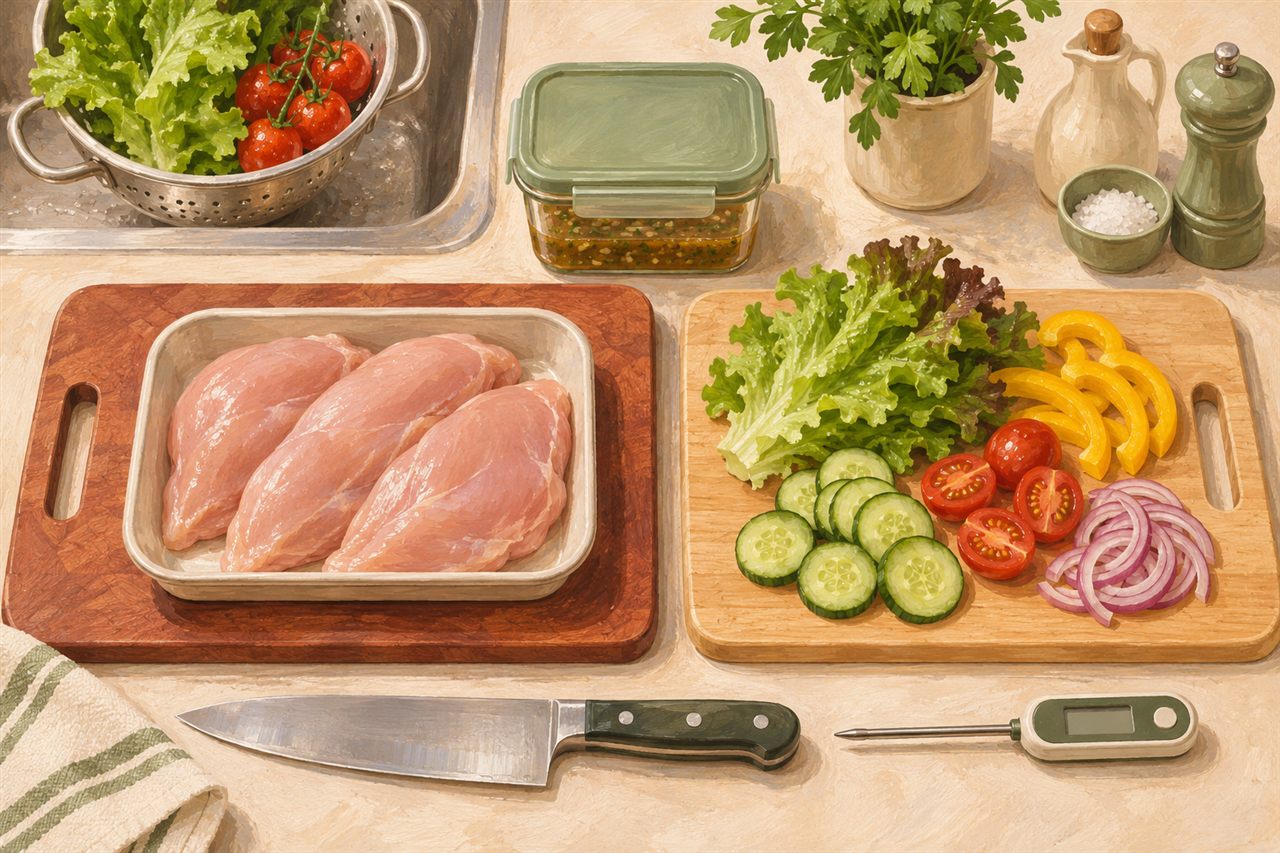
Cut and season for the cooking method
Trim and portion according to the recipe. Similar-sized pieces tend to cook more evenly, particularly in a skillet or on a tray. For a roast, keep the piece intact if the method depends on its shape. A mallet can flatten a thick piece for even cooking, but use the tool's instructions and contain splashes. Our meat tenderizer comparison explains the different formats; it does not replace safe handling.
Seasoning can be simple. Salt, pepper and a recipe-appropriate spice blend often do enough. If you use a marinade, mix it in a clean container and keep the meat refrigerated while it sits. The USDA says to marinate meat and poultry in the refrigerator. Set aside a clean portion of sauce before adding raw meat if you want sauce for the finished dish; do not pour used marinade straight onto cooked food.
Keep the recipe's stated timing for texture, but treat it as an estimate for safety. Thickness, starting temperature and pan heat vary. A food thermometer, inserted into the appropriate part without touching bone, is the final check. Clean the thermometer between raw and cooked uses as its maker directs.
Cook to the correct internal temperature
Appearance is an unreliable safety test. The FoodSafety.gov temperature chart lists 165°F (74°C) for all poultry, 160°F (71°C) for ground meats, and 145°F (63°C) with a three-minute rest for whole cuts of beef, veal, lamb and pork. Check the specific type you are cooking, including fish, eggs or leftovers, rather than memorizing one number for everything.
Measure in the thickest part of the meat, away from bone or the pan. For irregular pieces, check more than one spot. If it has not reached the safe minimum, keep cooking and recheck. Some recipes intentionally cook beyond that minimum for texture; the chart gives the safety floor, not the only palatable endpoint.
Rest meat when the chart or recipe calls for it. For the specified whole cuts, the three-minute rest is part of the safe minimum instruction. Keep the cooked food on a clean plate, not the one that held it raw. If you are preparing a mixed dish, consider the ingredients and follow the applicable guidance for the finished food.
Chill leftovers promptly
Put cooked leftovers in shallow containers and refrigerate them promptly. FoodSafety.gov's storage chart generally lists cooked meat or poultry leftovers for three to four days in a refrigerator at 40°F (4°C) or below. Label the container, especially if several batches are stacked in the fridge. Use the chart for freezing quality guidance rather than assuming every cooked dish stores identically.
Do not leave the serving platter on the table for the rest of the evening. Divide a large amount so it cools more quickly. When reheating leftovers, follow the safe temperature for leftovers on the FoodSafety.gov chart, which is 165°F (74°C). A hot edge and a cold middle are common reasons to stir, turn or check more than one spot.
Clean boards, knives, sink and worktops after the raw-meat stage. Dry equipment before storing it. If the meal involved vegetables, our vegetable prep guide gives a separate routine for washing and cutting them safely.
Meat preparation questions
Can I thaw meat on the counter?
No. Use the refrigerator, cold water or microwave methods described by USDA FSIS. Cold-water and microwave thawed meat should be cooked immediately. A counter thaw can leave the outside too warm while the center is still frozen.
Should I rinse chicken before cooking?
No. USDA FSIS advises against it because splashes can spread bacteria around the sink and nearby surfaces. Keep the raw chicken separate, clean anything it touches and use a thermometer to verify the cooked temperature.
Can I reuse marinade?
Reserve a clean portion before it touches raw meat if you want a finishing sauce. If marinade has touched raw meat, USDA says it must be boiled before use as a sauce, and its guidance advises against saving used marinade. Keeping a clean portion aside is simpler.
What if the meat looks done but the thermometer reads low?
Continue cooking and check again. Color, juices and crust cannot reliably confirm the safe internal temperature. Check the thermometer placement and consult the temperature chart for that specific meat, including any required rest time.