
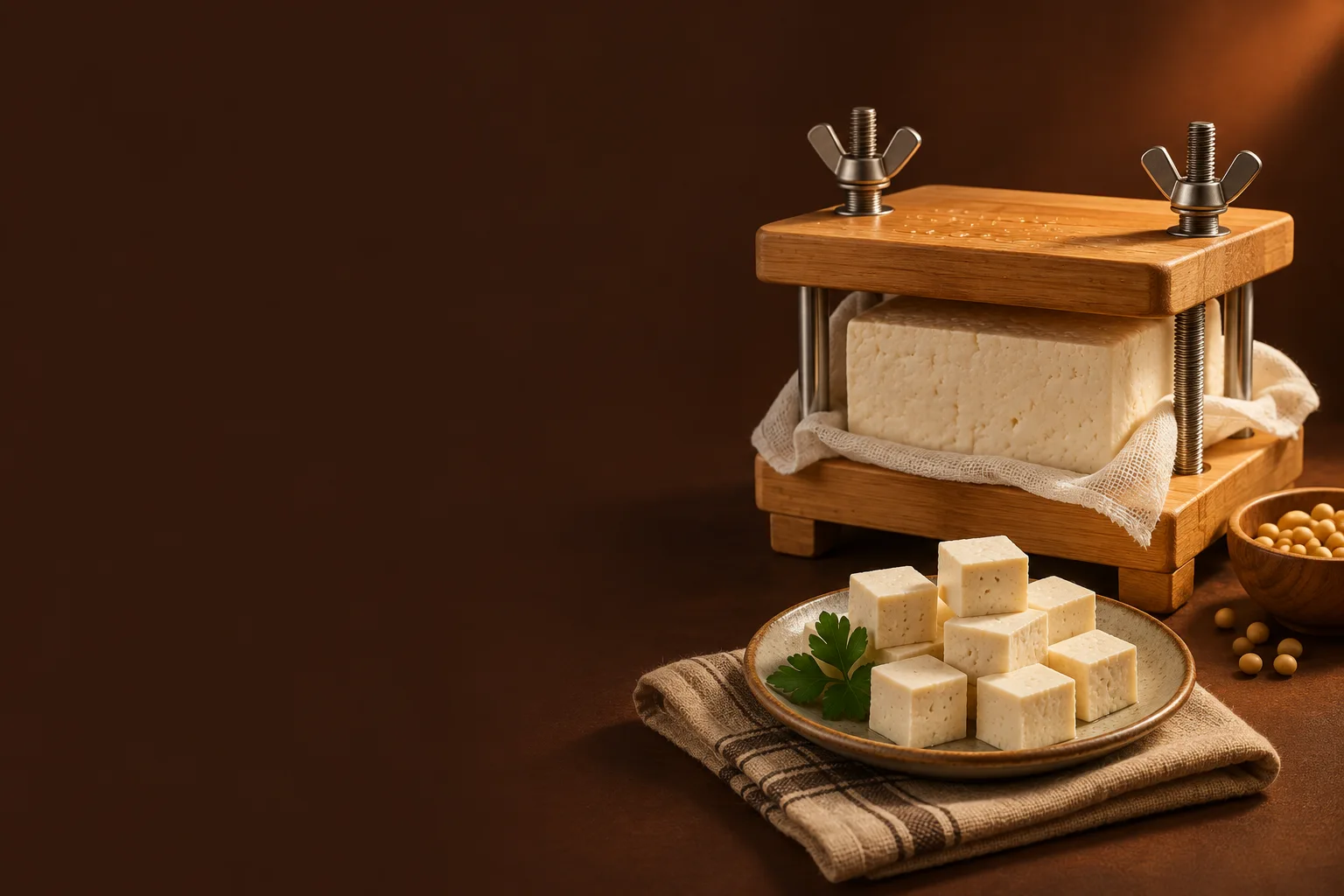
What turns soy milk into tofu?
Tofu begins as soy milk. A coagulant makes the proteins gather into soft curds, which are then separated from liquid and, for a firm block, pressed. The University of Illinois Extension describes tofu as coagulated soy milk. That simple description helps explain why the same starting ingredient can become a delicate, spoonable tofu or a block you can slice: the curd formation and handling differ.
Home recipes vary. Some start with dried soybeans and make the milk first; others use plain soy milk. Some specify a calcium salt, while others use a different food-grade coagulant. Their amounts and temperatures belong together. Select a complete, tested method before shopping and follow it from beginning to end. The Cultures for Health homemade tofu recipe is one example with explicit ingredients and stages. Treat its quantities as a set, rather than borrowing a step from one recipe and a spoonful from another.
Making tofu gives you control over texture, but it is not automatically cheaper or quicker than a prepared block. The first batch is most useful as a way to learn how the milk and coagulant behave. If your goal is tonight's stir-fry, buying plain tofu and using our tofu press guide may be the more practical route.
Choose milk and coagulant as a pair
Check the exact milk description in your chosen recipe. A carton labelled soy milk is not necessarily the same as the milk the recipe expects: sweeteners, flavors and stabilizers change the ingredient list. Plain, unsweetened milk with the specified soy content is the safer starting point for a repeatable batch. If the recipe starts with beans, soak, blend, strain and heat them exactly as directed before reaching the coagulation stage.
The coagulant must be food grade and suitable for tofu. Calcium sulfate and magnesium chloride are common examples, but their concentrations and packaging can differ. The method may ask you to dissolve a measured quantity in water and add it at a particular milk temperature. Do not swap coagulants by volume or substitute a household chemical that happens to share a similar name. Read the package as well as the recipe, especially if it is your first time using the ingredient.
Keep soy allergy in mind when cooking for someone else. Tofu is a soy food, and the FDA lists soy among major food allergens. Label a homemade block clearly and avoid serving it as an unidentified ingredient. Check sauces and toppings separately if you need to accommodate other allergies.
Set up a clean, calm work area
Measure the milk and coagulant before turning on the heat. Put a thermometer, large pot, stirring spoon, draining bowl, clean cloth and mold within reach. The mold needs a stable way for liquid to escape without tipping. A press sold for squeezing moisture from an already-formed block may not work as a mold for loose curds; check its instructions. A makeshift arrangement can work only if it is clean, food-safe and steady under weight.
Wash hands, utensils and work surfaces before handling the milk and curds. FoodSafety.gov's four food-safety steps cover cleaning and prompt chilling, both relevant here. Use a cloth reserved for food and laundered between batches. Keep raw meat or its utensils away from this ready-to-eat preparation.
Make room in the refrigerator before you begin. You do not want to leave a finished block on the counter while looking for a container. A shallow, lidded container helps the tofu cool promptly and keeps it separate from other foods. Write down the start time, milk brand and coagulant before the kitchen gets busy; those notes will be more useful than a vague memory if you want to adjust the next batch.
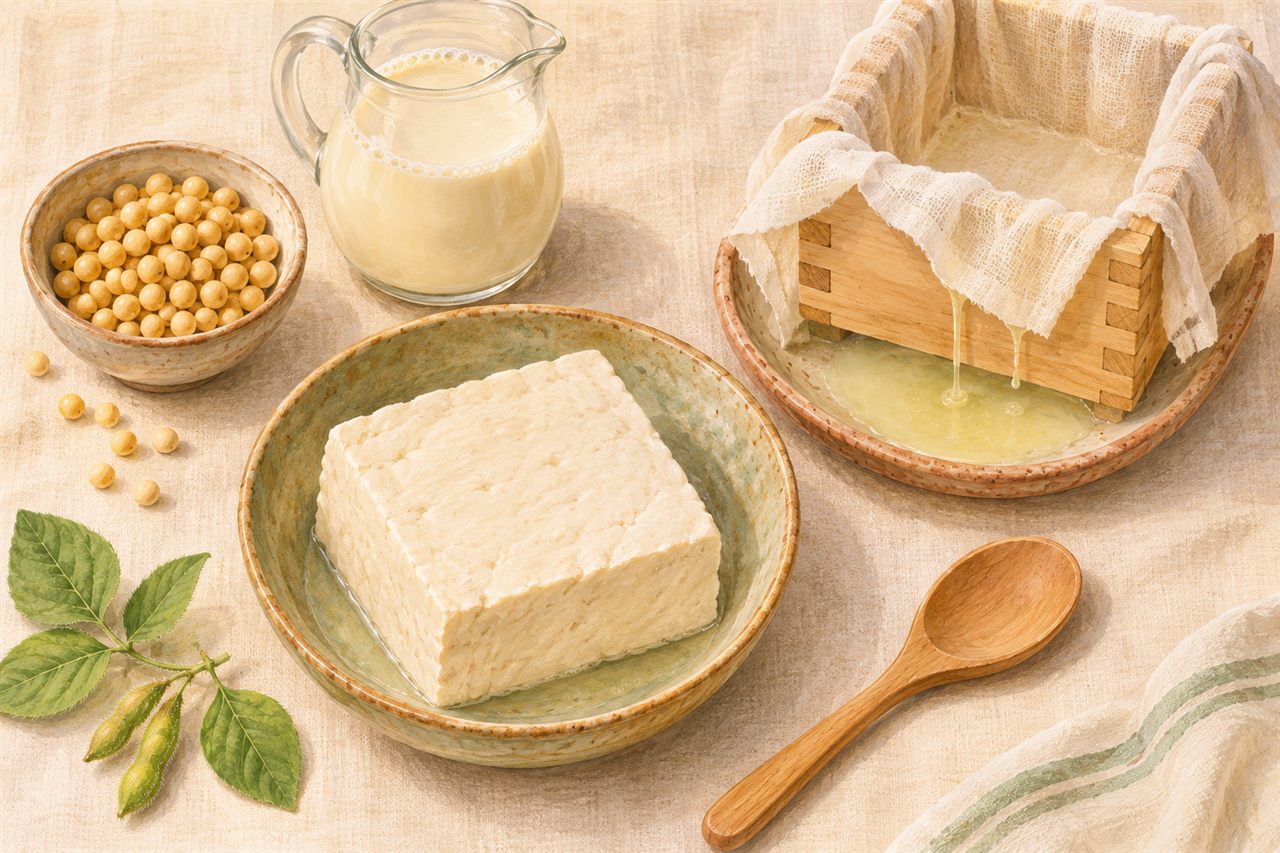
Heat, coagulate and let the curds settle
Follow the temperature in your recipe, using a thermometer rather than steam or touch as your guide. If the recipe calls for heating and then cooling the milk, allow that cooling step. Add the dissolved coagulant as instructed and stir only as much as the method says. Vigorous stirring after curds begin to form can break them into pieces that are difficult to transfer.
Rest time matters as much as the addition itself. Leave the pot undisturbed for the full period in the recipe, then look for a distinct separation between curds and liquid. The liquid may not look identical from one batch to another. Avoid trying to rescue an uncertain batch with an arbitrary extra dose of coagulant; that changes the taste and makes the result harder to interpret. Note what happened and compare it with the recipe's troubleshooting guidance.
If little separation occurs, check the simplest variables first: did the milk meet the recipe's requirements, was the coagulant fully dissolved, and did the milk reach the specified temperature? If the curds form but seem fragile, review how much you stirred after adding the coagulant. Change one variable on the next batch so you can tell which change helped.
Drain and press for the texture you need
Transfer the curds carefully into the lined mold and allow the liquid to drain. Set the top or weight evenly, following the chosen recipe's pressing time. More weight is not automatically better: a hard push can force soft curds through the cloth or create an uneven block. The first finished piece may look less tidy than a supermarket block. Shape is less important than a clean process and a texture you can use.
Decide on the intended dish before pressing. A softer tofu can suit a bowl or a gentle sauce; a firmer block is easier to cut into cubes. For a crisp skillet preparation, moisture on the surface also matters. Illinois Extension's tofu guide explains why pressing helps a block hold its shape. You can still press an already-made firm block just before cooking, which is a different task from molding fresh curds.
Unwrap with clean hands and inspect the block. If it is too soft for the planned stir-fry, use it in a gentler dish rather than pressing it repeatedly until it falls apart. If it is quite firm, dice it for a sauce or a tray bake. Keep a note of the press time and weight for next time.
Chill, store and cook the finished tofu
Homemade tofu is perishable. Move it into a clean container and refrigerate promptly. FoodSafety.gov advises refrigerating perishable food within two hours and keeping the refrigerator at 40°F (4°C) or below; use the one-hour limit when the surrounding temperature exceeds 90°F (32°C). Do not leave a fresh block out overnight or treat it like shelf-stable packaged tofu. Shelf-stable commercial packaging uses a different process.
Use the storage direction in your recipe for the block you made. Illinois Extension's advice for opened tofu describes covering unused tofu with fresh water in the refrigerator and changing that water daily, for up to five days. That is guidance for a purchased product, so do not assume an untested homemade batch has the same life. Make a manageable quantity, date the container and discard tofu that has been mishandled or shows spoilage.
To cook, pat the block dry, cut it to suit the dish and season it. A firm cube can go into a hot pan; a tender piece is better handled gently in soup or sauce. If you are building a full meal, our vegetable-prep guide covers the other ingredients. Keep the soy allergy in mind at the table as well as in the kitchen.
Common questions about homemade tofu
Can I use any soy milk?
Use the soy milk specified by the complete recipe. Plain and unsweetened is a good starting description, but the ingredients still matter. A failed batch may reflect the milk rather than your stirring. Record the brand and ingredient list, then try a recipe-approved milk before changing several other variables.
Do I need a specialist press?
You need a safe way to drain and shape curds if you want a block. A purpose-made tofu mold is convenient, but a recipe may describe another stable, food-safe arrangement. A press designed only for an existing block is not necessarily a curd mold. Check its instructions and avoid a weight that can slip.
Why did my tofu crumble?
Small curds, rough transfer or uneven pressing can produce a fragile block. Follow the recipe's mixing and rest instructions, then lift the curds gently. A crumbled batch may still be useful in a sauce if it was handled safely. Change one step at a time next time.
Is homemade tofu ready to eat?
The process in a complete recipe heats the soy milk, but safe handling still matters after coagulation. Keep utensils clean, chill the finished tofu promptly and follow the recipe's cooking or serving directions. If you are preparing food for someone with a soy allergy, tofu is not suitable regardless of whether it is homemade.