

Keep oil out of every drain
Cooking oil can move through a sink while warm, then cling to plumbing as it cools and mixes with other waste. New York City Environmental Protection warns that buildup can block household and city pipes and cause sewer backups. Pouring hot water or dish soap after the oil does not turn the drain into a safe disposal route.
Do not use the toilet, garbage disposal or a street drain either. EPA's septic guidance also says to keep grease and oil out of septic drains. The practical rule is to capture the oil before washing the pan, whether your home uses a sewer or a septic system.
Keep cooking oil separate from motor oil and other household chemicals. They have different collection systems and may contaminate a cooking-oil recycling stream. If you are unsure what a facility accepts, check its current instructions before bringing anything there.
For a light film, cool and wipe the pan
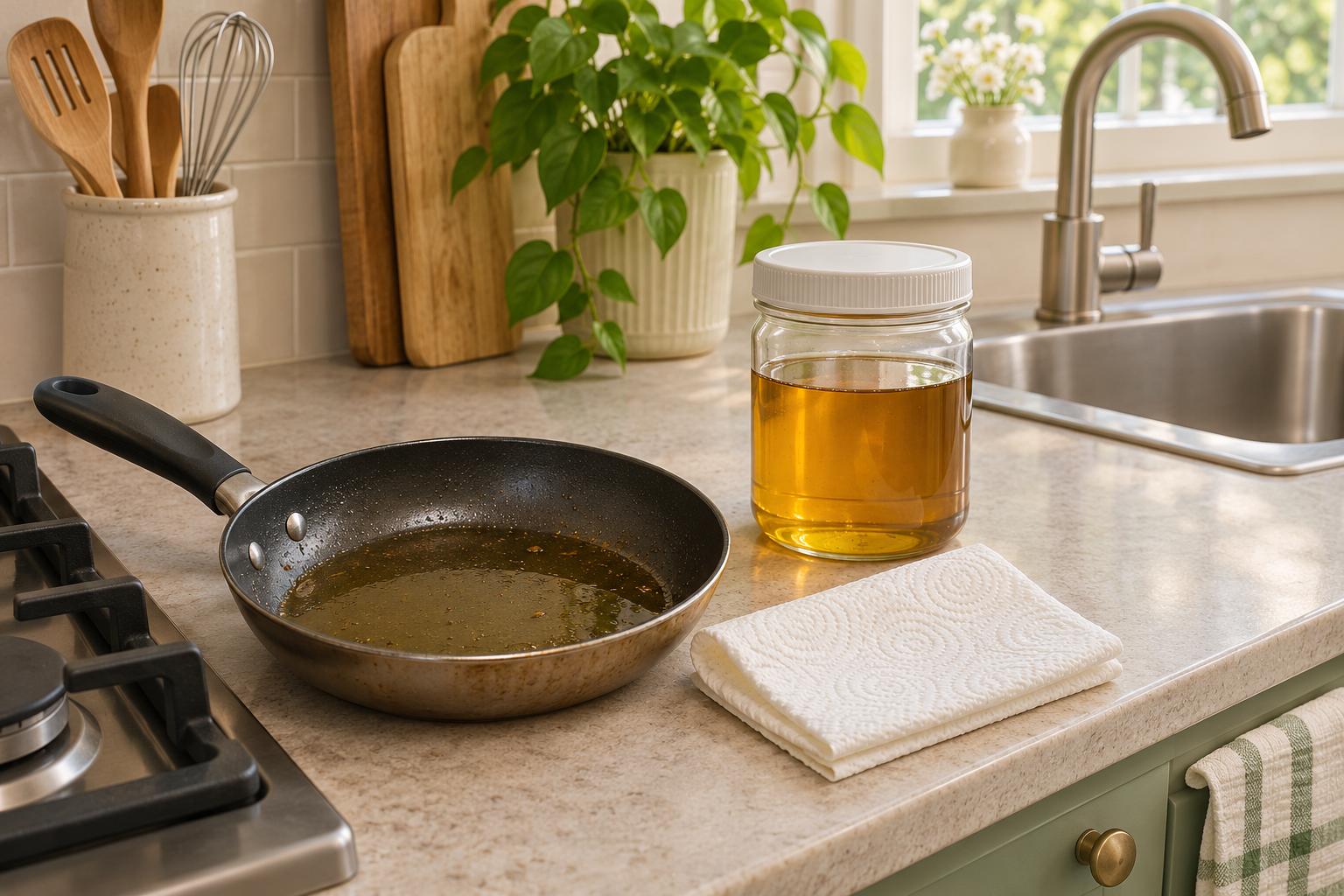
A small amount of residue does not need a large storage jug. Wait until the pan is cool enough to handle, then use a paper towel or other absorbent material to remove the oil before washing. Scrape food bits into the appropriate waste stream for your area. New York City Sanitation recommends wiping remaining grease from cookware after collecting the larger liquid amount.
Check local rules for the used towel. Seattle's utility guidance, for example, allows small oil-soaked paper in its compost system, while another municipality may require trash. Do not assume that every paper towel or greasy food package belongs in the same bin. The important plumbing step happens before the dish reaches the sink.
Let hot bacon fat or other animal fat cool as well. A paper towel can handle a thin coating, but a pan with a substantial pool needs a container. Avoid adding liquid grease to a bin where it can leak onto a worker or spread through other waste.
For a larger amount, use a sturdy closed container
After oil has cooled completely, pour it into a container that will not leak, close it securely and keep it upright until disposal. A funnel can reduce spills. Choose a container that suits the quantity and the local waste route; do not use a thin open cup or a container likely to be mistaken for a drink. If your municipality accepts sealed household cooking oil in ordinary trash, follow its labeling and placement rules.
New York City Sanitation, for instance, instructs residents to let oil cool, pour it into a container, seal it and put it in the trash. That is a New York City rule, not a universal one. Seattle Public Utilities likewise tells residents to cool oil and use a covered container for larger amounts, but its small-residue compost directions differ. Check your city or county's own guidance.
A fryer can hold much more oil than a skillet. Do not move the fryer, remove its tank or pour its contents while hot. Follow the appliance manual for safe cooling and transfer. Our air fryer versus deep fryer comparison includes that cleanup burden in the equipment decision.
Check whether your area collects cooking oil
Some communities collect used household cooking oil for recycling, while others direct residents to sealed trash. Austin Resource Recovery, for example, describes appointment-based drop-off or pickup for eligible residents and asks for clearly labeled containers. Those details can change and apply only to that service area.
Search your local solid-waste or public-utilities website for "residential cooking oil." Look for accepted oil types, container limits, whether food scraps need filtering, appointment requirements and whether the collection is for households or businesses. Do not leave a container at a restaurant or grease bin without its permission; commercial waste systems may not accept public drop-offs.
If collection is available, keep the oil in the container specified by that program. If not, follow local sealed-trash directions. The most environmentally attractive option is still the one your area actually accepts, not an imagined recycling route that sends oil to the wrong stream.
Decide on reuse separately from disposal
You may wonder whether oil from a fryer can be used again. That is a food-quality and safety decision, not a reason to leave oil in the appliance indefinitely. Follow the oil and fryer instructions and assess the food it cooked, its appearance and storage conditions. Do not assume that every used batch is suitable for another meal.
If you will keep oil, cool and store it as the source instructions require, in a clean closed container away from contamination. If you will discard it, plan the destination before the next fry. Repeatedly adding fresh oil to a deteriorating batch does not reset it. Keep the container away from children and pets while waiting for disposal.
Our small deep fryer guide covers removable tanks and other features that affect the work after cooking. An air fryer usually has less liquid oil to manage, but it still leaves grease and crumbs to clean; see our air fryer cleaning guide.
A simple cleanup sequence
- Turn off the cooking appliance and let the oil and vessel cool fully according to its manual.
- Decide whether the amount is a wipeable residue or a larger liquid pool.
- For a pool, transfer to a sturdy, closable container without overfilling it; wipe the remaining film.
- Check current local rules for sealed trash or a household cooking-oil collection program.
- Wash the pan only after the bulk of the fat is out.
Keep a spare container and funnel in a designated cabinet if you fry often. That small bit of preparation removes the temptation to pour a hot pan into the sink because no other option is ready.
If oil spills, absorb it and clean the surface according to the material and product directions. Avoid sending the spill down an outdoor drain. The same principle applies to grease from a roasting tray or bacon pan, not just a deep fryer.
Cooking oil disposal questions
Can I pour oil down the drain with hot water and soap?
No. Capture the oil before dishwashing. Warm oil and detergent can still move into plumbing and contribute to buildup farther along.
Can I put cooking oil in the recycling bin?
Only if a local program specifically accepts it and you follow its container rules. Ordinary curbside recycling usually does not accept a loose container of cooking oil.
What should I do with bacon grease?
Let it cool. Wipe a thin residue; collect a larger amount in a closed container and use the disposal route your municipality permits. Keep it out of sinks and toilets.
Can I bring oil to any restaurant's grease bin?
No. A business collection bin is not automatically a public drop-off point. Use an authorized household program or the local trash guidance.