Read the whole recipe before measuring
Start by reading the ingredient list and method all the way through. Look for a resting or chilling stage, an instruction to use softened butter, or a pan size you do not own. A recipe that appears quick in the headline may still need an hour in the refrigerator. Decide whether you have that time before cracking the eggs.
Set out the ingredients in the order you will use them. Check that baking powder, yeast and spices are the ones named in the recipe. Baking powder and baking soda are not interchangeable; they react differently in a formula. If the raising agent has been open for a long time, use the King Arthur Baking freshness checks before relying on it. A fresh packet will not fix a mismeasured recipe, but an inactive one can undermine otherwise careful work.
Keep the first attempt faithful to the recipe. Swapping flour type, sweetener and pan all at once makes a disappointing result hard to explain. Once you know the original bake, change one variable and compare. This is especially useful if you are adjusting for the equipment you already own rather than buying a specialty pan for one cake.
Measure flour and liquids consistently
A kitchen scale is helpful because flour packs differently into a measuring cup. If a recipe gives weights, use them. If it gives only cups, fluff the flour, spoon it into the cup and level it rather than scooping hard into the bag. King Arthur's flour-measuring guide explains why the method changes the amount that lands in the bowl.
Measure liquids in a jug made for liquids and check the line at eye level. For small amounts, use the spoon size named in the recipe. If you convert between grams, ounces and cups, use a trusted ingredient-specific chart; a cup is a volume, and its weight changes with what you put in it. Write down any conversion you use so you can repeat a successful batch.
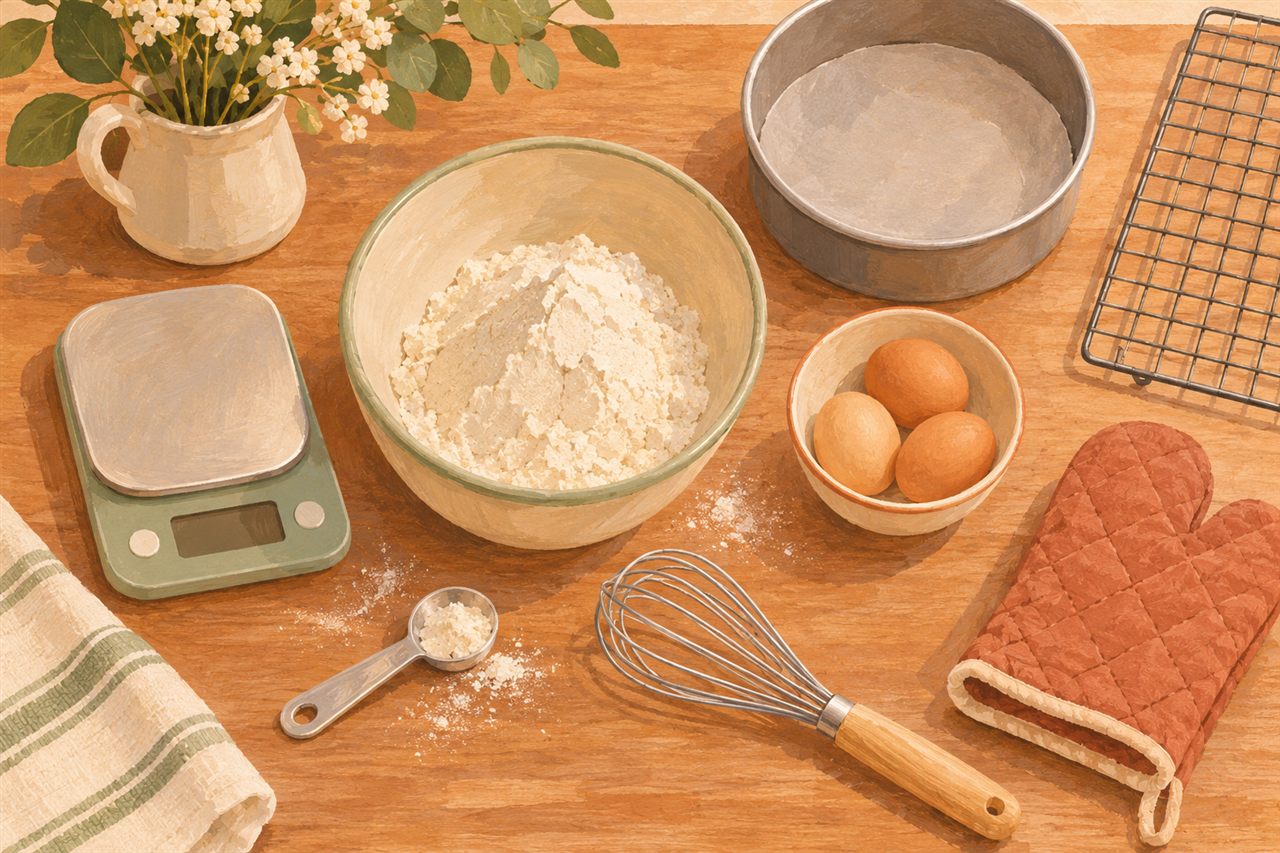
Set the bowl on a clear surface and tare the scale between ingredients when the recipe permits. That reduces washing up, but keep an eye on the display: adding too much salt or baking powder directly into a full bowl is difficult to undo. Measure powerful ingredients separately if you are unsure. A small dish can save the entire mixture.
Use the pan the recipe expects
Pan dimensions affect batter depth and baking time. A smaller pan may make a batter deeper and slower to bake; a larger one spreads it thinner. King Arthur's pan-size guide explains why a seemingly minor swap can change the result. For a beginner, using the named size and shape is the easiest way to make the recipe's time and doneness cues meaningful.
Check whether the recipe asks for a light or dark pan, a lined base, greased sides or an ungreased pan. Those instructions are purposeful. Lining a cake pan with parchment can help release it, but some cakes need to cling to the sides as they rise. Read the specific method before applying a universal habit. Our baking pan guide helps compare materials and formats if you need to fill a gap in your cupboard.
Put the pan on a stable rack position and leave space for air to circulate. Do not balance a large tray over another pan to squeeze in more baking. If the recipe yields more batter than your pan can hold safely, bake in batches using the method's advice rather than filling it to the rim.
Treat temperature and mixing as recipe instructions
Preheat the oven when the recipe says to, and allow it to reach its set temperature before the pan goes in. Some specialized recipes intentionally start cold, which is why the written method matters. If your oven runs unpredictably, an oven thermometer can help you see what it is doing, but it does not replace watching the bake near the end.
Ingredient temperature matters in some recipes too. Butter that is too cold may not cream as expected; melted butter behaves differently from softened butter. King Arthur's recipe success guide describes how to bring eggs and butter toward the temperature requested by a recipe. Avoid leaving perishable ingredients out for an extended period while you get distracted by other work.
Mix only to the stage the recipe specifies. 'Until combined,' 'until smooth' and 'knead until elastic' describe different goals. Use a spatula to scrape the bowl so dry pockets do not hide at the bottom. If you are uncertain, stop the mixer, scrape and check the texture before giving it another minute. More mixing is not a universal way to improve a batter.
Check the bake, then cool it properly
Start checking close to the recipe's earliest suggested time. Oven behavior, pan material and batter depth can shift the finish. For cakes, use several cues together: a set-looking top, appropriate color, slight spring when touched and a tester result suited to that recipe. King Arthur's cake-doneness guide explains why one sign alone can mislead. For bread, biscuits or cookies, follow the cues given for those specific bakes instead of applying a cake test.
Open the oven deliberately and use dry oven mitts. If the center needs more time, close the door promptly and recheck after a short interval. Repeatedly pulling out the pan can affect the bake and exposes you to hot steam. Make a note if your oven consistently needs a different time; that observation is useful when repeating the same recipe.
Cooling is part of the method, not dead time. Some cakes need to rest briefly in the pan before turning out; cookies often firm as they cool on the tray or rack. Frosting a warm cake can melt the icing and tear the crumb. Follow the recipe's cooling directions and prepare a rack before the pan comes out.
Handle raw flour and eggs safely
Do not taste raw dough or batter. The FDA explains that flour is a raw food and that raw eggs can also carry harmful bacteria. Baking or cooking according to the recipe is what makes flour-containing foods safe to eat. A tiny taste while checking sweetness is not a reliable safety exception.
Wash hands, utensils and surfaces after they touch raw ingredients. Flour can spread across a worktop as dust, so wipe it up carefully and keep ready-to-eat foods away from the mixing area. If you prepare dough ahead, refrigerate it according to the recipe and use a refrigerator thermometer. The FDA advises 40°F (4°C) for refrigerated dough storage.
If you are baking for someone with an allergy, check every package again, including decorations and mixes. Do not assume that a recipe becomes suitable because one obvious ingredient was swapped. If a safe substitution is important, find a recipe developed for that need rather than improvising several replacements in a first attempt.
Beginner baking questions
Do I need to buy a stand mixer?
No. Many beginner recipes work with a hand whisk, spatula or hand mixer, provided you can reach the texture described. Check the method before starting: a long knead or a sustained creaming step may be easier with a mixer, but the appliance is a convenience rather than a requirement for every bake. Our hand mixer guide can help if you decide you will use one often.
Can I replace an eight-inch pan with a nine-inch pan?
It depends on the shape, capacity and recipe. A larger surface can make the same batter shallower and shorten its bake. Use a pan-conversion guide from a reliable baker, and watch doneness earlier if you make a supported swap. For a first try, using the exact pan is simpler.
Why did my cake sink?
Several causes are possible, including insufficient baking, an unsuitable pan, inaccurate ingredient amounts or a recipe change. Compare your notes with the method before guessing. Check the center's doneness cues next time and change one factor at a time; a single sunken cake does not prove the oven is broken.
How should I improve the next batch?
Write down the pan, ingredient brands, mixing method, oven setting, actual time and what the finished bake was like. Repeat the original recipe once if the result was close. If you adjust, choose the one change most likely to address the specific problem. That small record is more useful than collecting dozens of disconnected baking tricks.